
TL;DR: In a significant win for smaller browsers, the open web, and the EU’s Digital Markets Act (DMA), Google has agreed to place the browser selected through the EU browser choice screen directly in the Pixel homescreen hotseat (replacing Chrome).
Previously, even when users selected a different default browser, Chrome remained in this prominent position, steering users back toward Google’s own browser and undermining the user’s choice.
We are grateful to BEUC, Mozilla, Vivaldi, DuckDuckGo, Ecosia and Brave for their valuable support in achieving this result, and to OWA volunteers John Ozbay, Roderick Gadellaa and James Heppell who helped make this happen at the DMA workshops last year. Finally, and perhaps most of all, we thank the European Commission’s Digital Markets Act team for its important precedent-setting work. The EU’s browser choice screens will help push the world toward a fairer and more competitive browser ecosystem, where gatekeepers can no longer rely on operating system defaults to preserve their market share and must instead compete to earn it.
What the Hotseat Is and Why It Matters
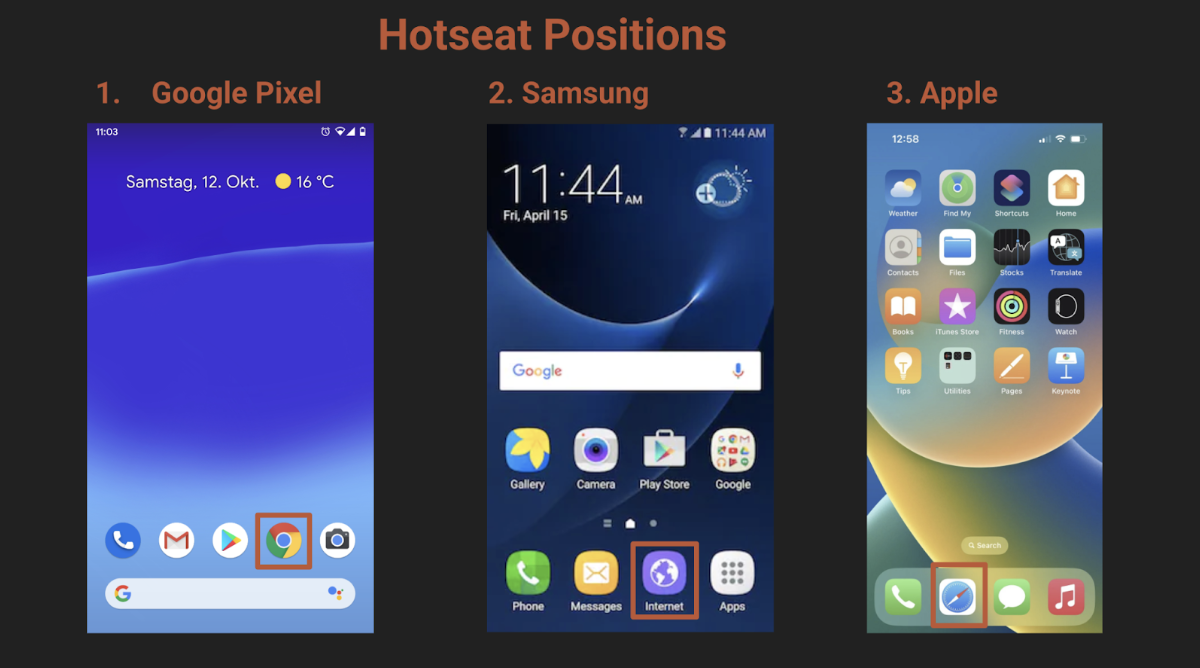
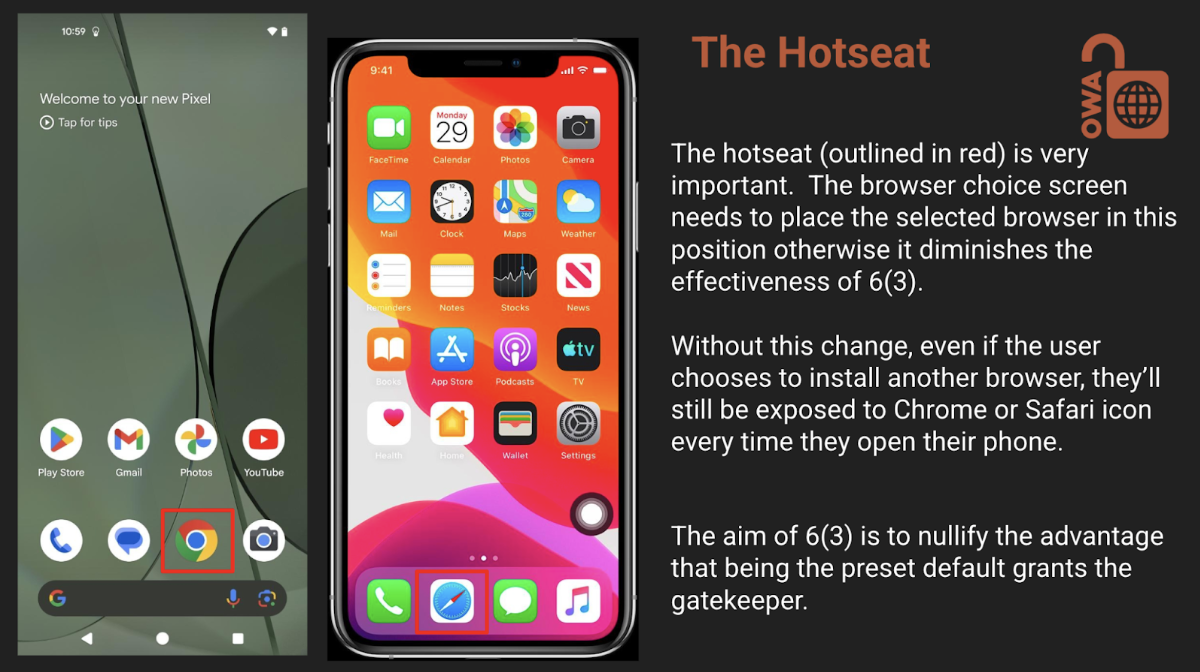
The hotseat refers to the set of app icons located on the dock at the bottom of the homescreen on both iOS and Android devices. These icons have the advantage of always being shown regardless of which homescreen the user is on. This is prized real estate for any commonly used app.
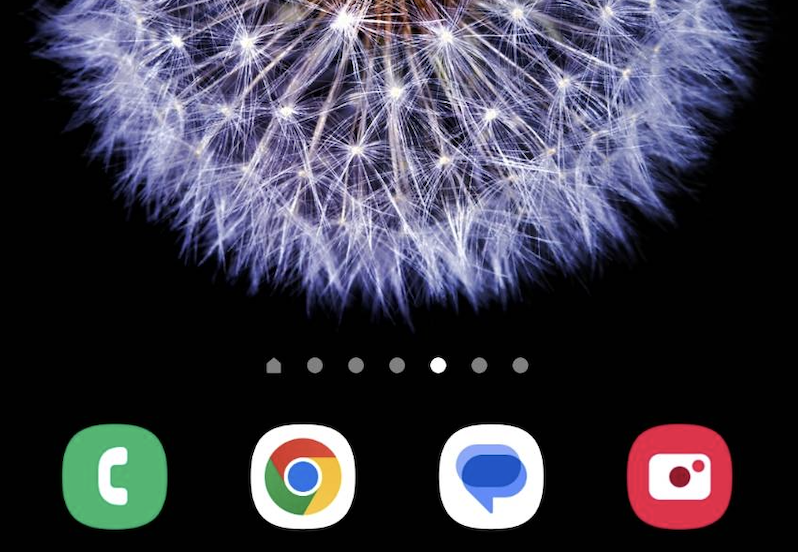
On all Apple devices and many Android devices, the gatekeeper’s browser is placed in the hotseat via the default setup of the device.
Our Longstanding Argument for Respecting User Choice
As far back as early 2023, OWA started its campaign for browser choice screens, including hotseat placement, through meetings with regulators.
This has long been a concern for Open Web Advocacy, and it was included in our list of recommendations published in our 7th of March 2024 article marking the beginning of DMA compliance obligations for gatekeepers:
Reduce the power of the default browser with a choice screen
Ensure that both Apple and Google implement effective designs for their browser choice screens. Specifically, the choice screen should not self-preference their own browsers, should grant the chosen browser the “hotseat” and should appear on all existing devices once and all new devices (including after backup and restore). Open Web Advocacy
We also reiterated this argument in multiple written submissions. To Apple's credit, they actually made this change, along with 6 other choice architecture suggestions we had submitted, although broader DMA compliance issues remain.
However Google refused to make the equivalent change on covered Android devices. When we (along with Mozilla) questioned Google about this at last year’s DMA workshop, Google representatives essentially flatly denied they had any obligation to do so under the wording in the DMA:
And then the question from Open Web Advocacy on hotseat, again our approach to this is informed by what the DMA says, and Article 6(3) is clearly about defaults, a hotseat is not a default, so a default is a service that will trigger as a result of a generic user action, as I mentioned earlier, and so if the user goes to do something, for example clicks on a URL, it would be the browser that is used in order to fulfil that specific user intent. The placement of a particular app on a device has nothing to do with the default. And so that is our view in respect of how the hotseat question fits with what we are talking about, when we are talking about compliance with the DMA. Clare Kelly - Google - Senior Competition Counsel
(emphasis added)
We disagreed. Specifically Google was trying to narrow the DMA by treating "default settings" as meaning only "which app was default", but the DMA’s own wording is broader. Article 6(3) covers any operating system default setting that directs or steers users toward a gatekeeper’s browser by default, not just which app is set as the default browser. That means pre-set choices like home screen placement or other OS-level configurations can also fall within scope when they advantage the gatekeeper’s services. In this context, the DMA applies specifically to defaults that shape user behavior in ways that favor the gatekeeper or determine which browser or service users are steered toward. You can read our full analysis here.
Google Finally Changes Course
On the 9th of March 2026, it emerged that Google had reversed its stance and agreed to give the chosen browser the hotseat, likely due to the work behind the scenes of the EU Commission:
Due to pressure from stakeholders (and most prominently, from Open Web Advocacy), the gatekeeper finally budged and agreed to place the icon of the browser selected by the user as a default from the choice screen displayed according to Article 6(3) DMA in the hotseat of new Pixel devices (page 125 of Alphabet’s compliance report) (although not on all Android devices). Dr Alba Ribera Martínez - Lecturer in Competition Law at University Villanueva
(emphasis added)
Choice Screen Design
Without prejudice to Google’s legal position that this is not required by Article 6(3), Google has agreed to place the icon of the browser selected by the user from the choice screen in the hotseat of new Pixel devices. Google - EU Digital Markets Act Compliance Report
The Hotseat Precedent
Given the successful implementation and precedent of the EU browser choice screen, we urge other regulators (such as the CMA and JFTC) to implement an equivalent design for both Apple and Google.
The EU choice screen is a strong design, but could be improved for future implementations with the following changes:
On iOS, the choice screen should display on startup, not on the user’s first interaction with Safari.
Changing default browser (not via the choice screen) should replace the operating system’s browser on the homescreen or in the hotseat.
The choice screen should be redisplayed on each major version upgrade where the gatekeeper’s browser is still the default.
The choice screen on Android should apply to any device where Chrome is placed prominently on the homescreen or hotseat via the default setup of the device.
On new devices, the gatekeeper’s browser should be uninstalled if it was not selected.
The choice screen should not force browser vendors to ship their browser via the gatekeeper’s app store in jurisdictions where alternative app stores and direct download are available.
If you're thinking about doing choice screens in your jurisdiction, please reach out!
Why This Matters for the Web
This development is another success for the DMA and for browser competition in Europe.
The EU browser choice screen has already helped smaller browsers gain market share by allowing users to make a genuine choice about their default browser. This choice screen has already led to meaningful gains in market share; Mozilla, for example, saw its daily active users double in France and Germany on iOS, where the hotseat change is implemented. DuckDuckGo’s findings suggest that replacing Safari in the hotseat boosted the iOS choice screen’s effectiveness by a factor of nine. Ensuring that the chosen browser also occupies the hotseat reinforces that choice and prevents platform owners from directing users back to their own products.
Browsers need to compete on merit, not via privileged placement within an operating system. It is genuine competition between browsers that delivers the best outcomes for consumers and developers. This change is one more step in the right direction.