
TL;DR: Newly published tests show a Chromium/Blink prototype running on iOS is 28.6% faster than Safari in Speedometer 3.1 page responsiveness tests. The tests also highlight a significant number of web features already available in the prototype but which rival browser vendors are blocked from bringing to iOS. This is a clear example of how much Apple's browser engine ban is costing consumers, businesses and the Web.
New iOS Blink Performance Statistics
The Edge web platform team has been contributing changes to Chromium to help build a prototype exploring what an iOS browser using Blink (via BrowserEngineKit) can achieve. Blink is the same open-source rendering engine that powers Edge on every other platform.
Over the weekend, I loaded a development build on my iPhone and ran some classic browser benchmarks side by side with Safari on the same device.
Newly reported by The Register, on Tuesday an Edge engineer published some very interesting statistics on the new Chromium prototype running on iOS 26.5.1 and how it stacks up compared to Safari.
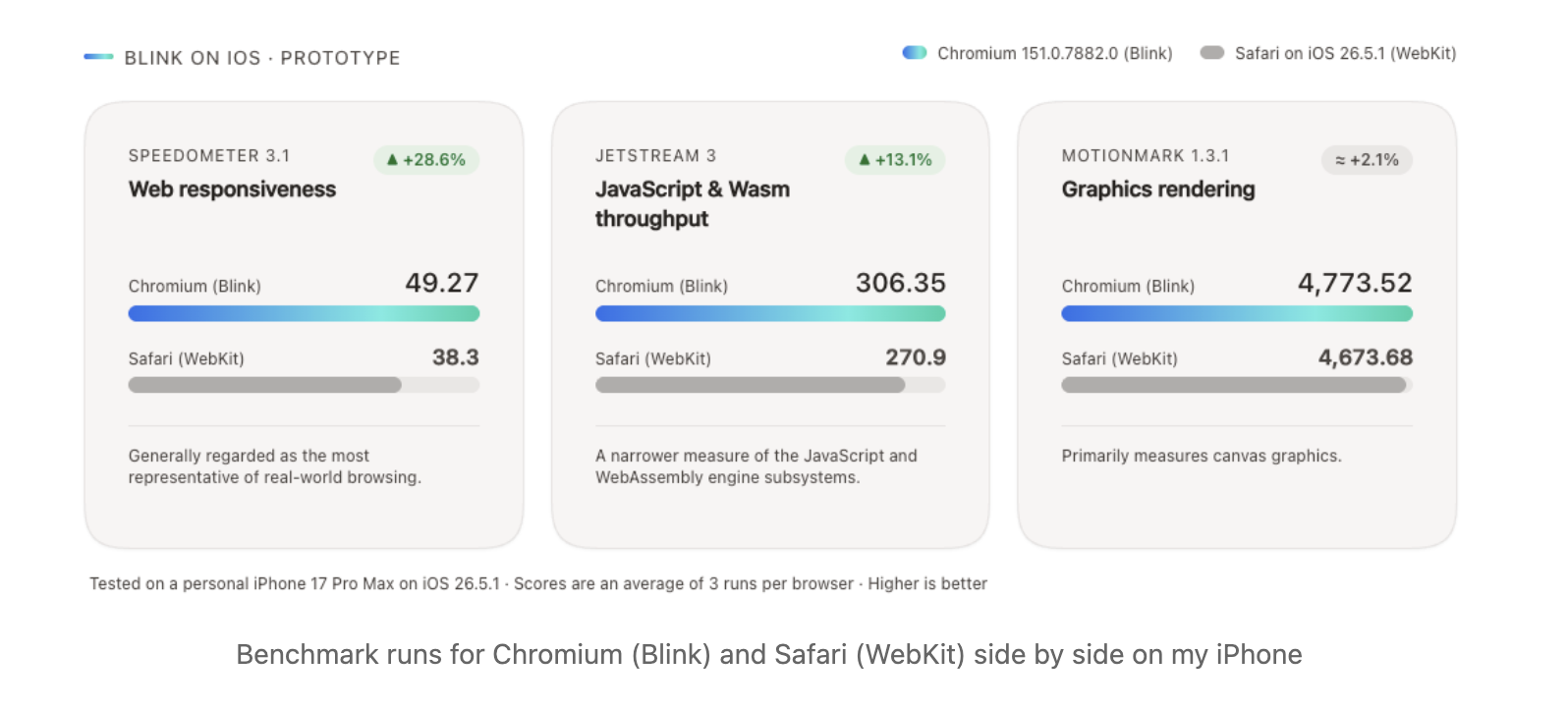
Speedometer is a browser-performance benchmark originally developed by Apple. Apple’s WebKit team described Speedometer as “the best way yet to measure browser performance”.
The tests show the Chromium (Blink) prototype is a striking 28.6% faster at web responsiveness than iOS Safari (and every other browser on iOS forced to use the bundled WebKit engine).
What makes this even more significant is that to the best of our knowledge, teams working at Microsoft and Google have not put any significant effort into optimising the engine on iOS.
Given how Chromium and WebKit are always vying for the top spot in Speedometer on macOS, it's really striking how big the gap is on iOS! And we haven't even really tried to optimize performance for that platform yet! IMHO this is what you should expect to see when there's a lack of competition!
Rick Byers - Principal Engineer on Chromium
(emphasis added)
A natural question arises: how could a browser engine, not yet optimised for iOS, outperform Safari by such a large margin? Surely a company as well-resourced as Apple should be able to deliver competitive performance on its own platform.
In our view, the answer is lack of competition. Apple had no need to invest in better iOS Safari performance as no one could compete with them due to their browser engine ban. All other browsers on iOS are equally under-performant due to being forced to use the same bundled WebKit engine.
Missing Features
Also published were some interesting feature comparisons using Microsoft Edge’s top developer needs dashboard highlighting a number of features the prototype supports that Safari (and by extension of Apple’s browser engine ban, all other browsers on iOS) do not.
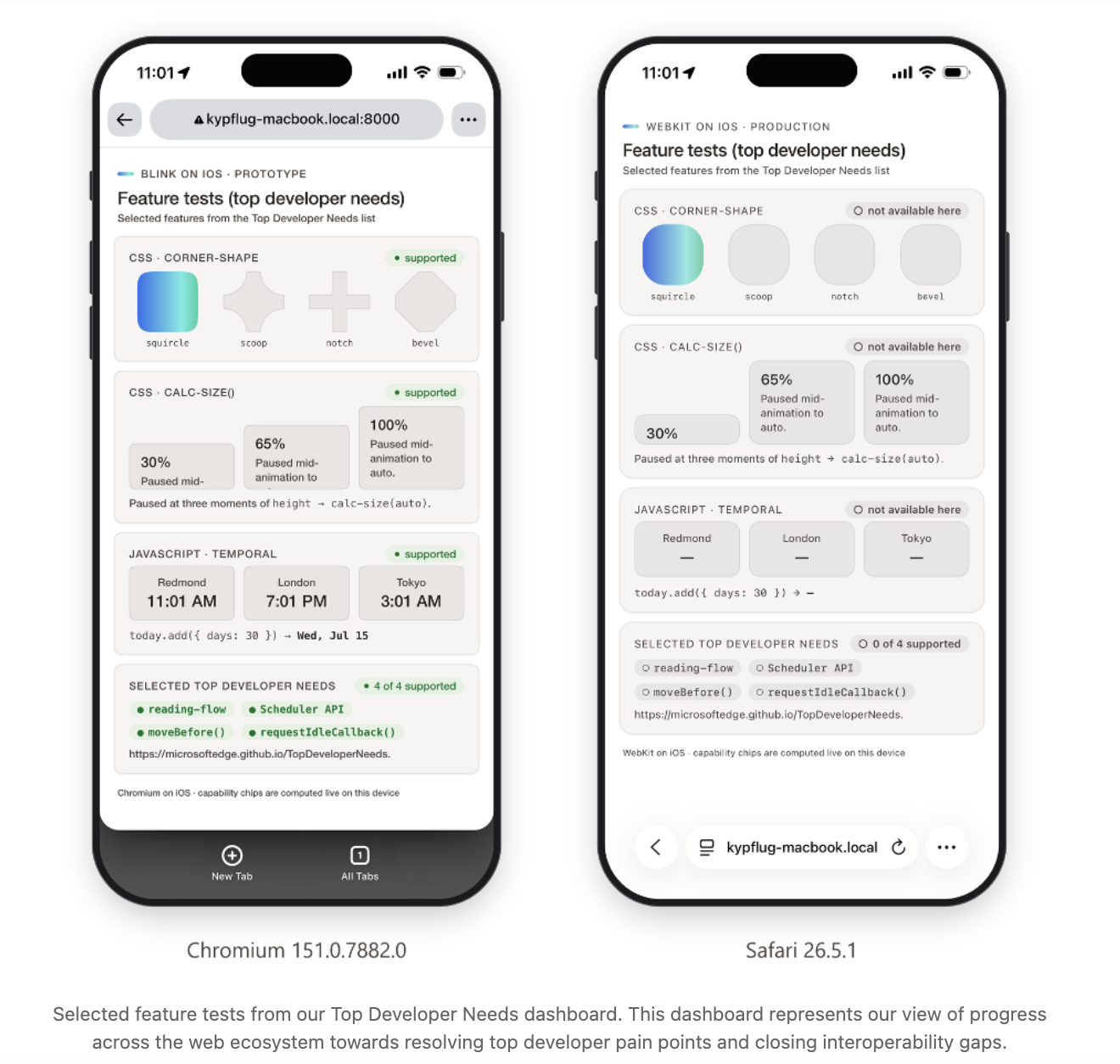
This dashboard represents our view of progress across the web ecosystem towards resolving top developer pain points and closing interoperability gaps. For each feature listed below, the relevant browser compatibility status, as well as the most recent stable channel test results from the Web Platform Tests (WPT) or test262 projects, are given. Microsoft Edge - 2026 web platform top developer needs
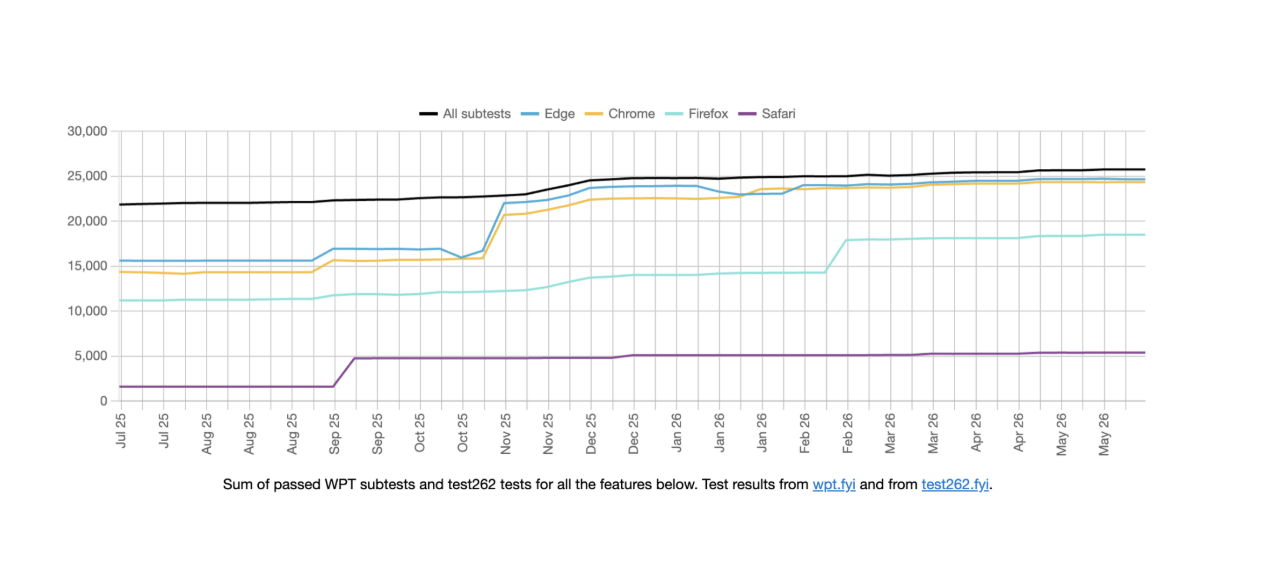
As you can see from the chart below, while there have been improvements, Safari lags significantly behind Edge, Chrome and Firefox.
Apple is Imposing a Cost on Consumers, Businesses and the Entire Web
This is a clear example of the costs Apple imposes on consumers and businesses worldwide, costs created by its 17-year ban on competing browser engines. Even in the EU and Japan, where Apple is now legally required to allow browser vendors to use their own engines, the barriers it has put in place ensure browser vendors are prevented from porting their own engines to iOS.
Apple is setting a ceiling on the entire mobile web. This harms the web’s performance, features and security. It also lowers Apple’s incentives to seriously invest in Safari as it has no fear of losing market share to competitors who could produce superior browsers for iOS. As the web is itself a platform, this harms not only browser vendors and their users, but every business that relies upon the web.
Why the Web Needs to Be Allowed to Compete
Browser engines are not ordinary app components. They are the foundation of the web platform, determining which web features are available, how fast web applications run, how secure users are, and whether web apps can compete with native apps. If Apple continues to control the only browser engine on iOS, then it continues to control the practical boundaries of the mobile web. That undermines the DMA’s goal of opening core platform services to genuine competition.
Unlike app stores and the operating systems they live in, the web is open, interoperable, and available to businesses of every size without asking permission from any gatekeeper. But the web can only compete if browsers can compete. If Apple can restrict browser engines on iOS, it can limit what the mobile web is capable of, and keep businesses dependent on native apps and app store rules.
Given that Apple has now had more than two years to produce a compliant solution, the European Commission needs to open a specification proceeding to instruct Apple, in precise terms, how these barriers must be removed. This is, in our view, the most critical intervention the EU could possibly make, and the one most likely to reshape the entire mobile ecosystem. No other intervention comes close.
The JFTC should take similar measures. We urge the JFTC to promptly launch the necessary investigations and order Apple to take steps to remove these barriers.